In recent years, the landscape of British homes has undergone a subtle transformation, reflecting broader societal shifts. As urban living becomes increasingly popular, and the demand for housing escalates, the average size of homes in the UK has notably decreased. This downsizing trend poses a challenge for families seeking to create functional and comfortable living environments within these compact spaces. Families are not merely adjusting to smaller houses; they are innovating and adapting in remarkable ways. British homes, once synonymous with sprawling gardens and multiple bedrooms, have now taken on the characteristics of compact design and space-saving solutions. In this evolving scenario, understanding how families navigate their living arrangements can be both enlightening and inspiring.
The Reality of Smaller Houses
The phenomenon of shrinking domestic spaces isn’t merely a product of creative architectural whims; it represents a response to pressing economic realities. According to recent studies, homes in Britain are now, on average, 20% smaller than those erected a few decades ago. This decline is evident in cities like London, where demand for housing continues to rise against a backdrop of constrained supply. Families grappling with increased cost of living are forced to reconsider their notions of space and functionality within their homes.
Economic Pressures and Housing Trends
One cannot overlook the interplay between economic pressures and housing trends. The cost of acquiring property has skyrocketed, and many families are finding it increasingly difficult to purchase larger homes. Consequently, smaller houses, often in more urban areas, have become more common. Families are now living in flats that may have previously accommodated single occupants or couples, thereby creating a more challenging but adaptable environment for raising children. For example, in vibrant neighbourhoods such as Brixton, the rise of micro-apartments illustrates not just resilience but also a willingness to thrive amid constraints.
This transition requires a considerable shift in family lifestyle, one that advocates minimising excess while maximising utility. Families are learning to curate their possessions carefully, embracing the philosophy that less is indeed more. However, the emotional toll cannot be overlooked; parents often feel the pressure of providing space and comfort for their children, all while navigating the realities of compact living.
Embracing Creative Spaces
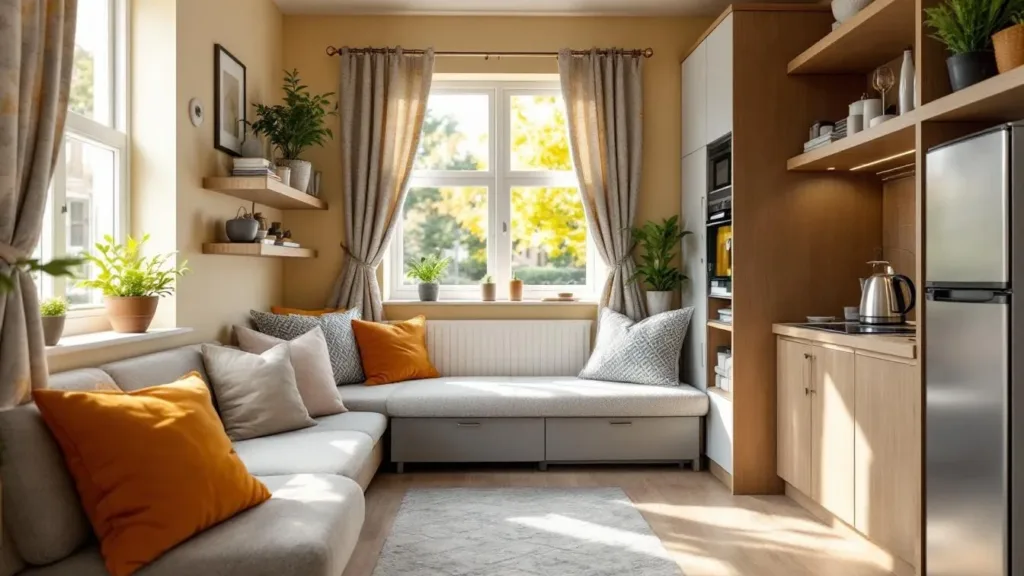
Despite the challenges posed by smaller homes, families are embracing creative solutions to adapt. Building on the principles of home organization and space-saving designs, many have transformed their living spaces into multifunctional areas. A child’s bedroom now doubles as a study, or the living room is fitted with modular furniture that can be easily rearranged to accommodate gatherings or quiet moments. The use of vertical space through tall shelving units allows for greater storage without sacrificing floor space, providing both practicality and aesthetic appeal.
A perfect example can be found in Edinburgh, where families have embraced innovative designs to maximise their home’s potential. The introduction of built-in storage solutions beneath staircases or in underutilised corners has allowed families to declutter and reclaim their living environments. This flexibility means that families can still enjoy quality time together within modest dimensions, despite the apparent constraints of their homes.
Family Adaptation: A New Approach to Living Space
Adapting to smaller living spaces necessitates a profound adjustment in family dynamics and daily routines. The way families meet this challenge can often illuminate their values and foster deeper connections within the household. The idea of shared spaces is crucial; for many families, the living room becomes more than just a place to watch television, evolving into a hub for activities and relaxation. This shared engagement can bolster familial bonds and encourage communication that might otherwise be neglected in larger, more segregated homes.
Creating Shared Experiences
In smaller homes, shared experiences often take precedence over individual desires for personal spaces. Families are increasingly involving children in household activities, whether it be cooking together in a compact kitchen or transforming their sitting room into a makeshift play area. By doing so, they foster a sense of togetherness, allowing each member to contribute to and shape their environment collaboratively. Moreover, this approach cultivates a greater appreciation for the spaces they inhabit and the memories created within them.
For example, a family living in a two-bedroom flat in Manchester may find joy in hosting game nights, turning a small living area into a vibrant social space filled with laughter and engagement. It is the adaptability of their spirit that transforms a limited space into an endless realm of possibilities, proving that happiness is not solely found in square footage but in shared moments.
Lessons in Minimalism
The trend towards smaller houses has inadvertently ushered in a more minimalist lifestyle for many families. Embracing minimalism does not mean a loss of comfort or warmth; rather, it encourages families to concentrate on quality over quantity. Parents are learning the value of investing in fewer, high-quality items that serve multiple purposes. An ottoman, for example, may provide seating while also storing toys, marrying functionality with style.
Moreover, as families adopt these principles, they often find a renewed appreciation for the essential aspects of life. In a world consumed by consumerism, the act of simplifying one’s belongings fosters a sense of tranquility and mindfulness. This shift towards minimalism can significantly impact children, teaching them the importance of valuing experiences over possessions, and nurturing a generation that is both resourceful and resilient.
Innovative Design Solutions for Compact Living
As families adapt to the realities of compact living, innovative design solutions are becoming an integral part of the conversation. Architects and designers are increasingly exploring ways to optimise space within smaller homes, often prioritising flexibility and adaptability. This exploration aligns closely with the principles of sustainable living, where families learn to make the most of what they have while treading lightly on the environment.
Architecture That Adapts
The rise of adaptable architecture has offered exciting possibilities for smaller houses in the UK. The concept of compact design is gaining traction, paving the way for versatile layouts that cater to family needs over time. Incorporating sliding walls or movable partitions allows families to alter their space according to their current needs, creating both private retreats and communal areas at will.
Consider the influence of eco-friendly materials such as cross-laminated timber or recycled steel, which not only facilitate efficient construction but also resonate with families eager to embrace green living. Families seeking homes in areas like Bristol are finding residences designed to be both aesthetically pleasing and environmentally conscious, demonstrating that modernity and sustainability can indeed coexist in smaller living environments.
Ultimately, as families in the UK face the challenge of smaller homes, their ability to adapt and innovate exemplifies the tenacity of the human spirit. Through creative use of space, the cultivation of shared experiences, and a shift towards responsible living, they are proving that happiness can flourish even in the most compact of homes.